
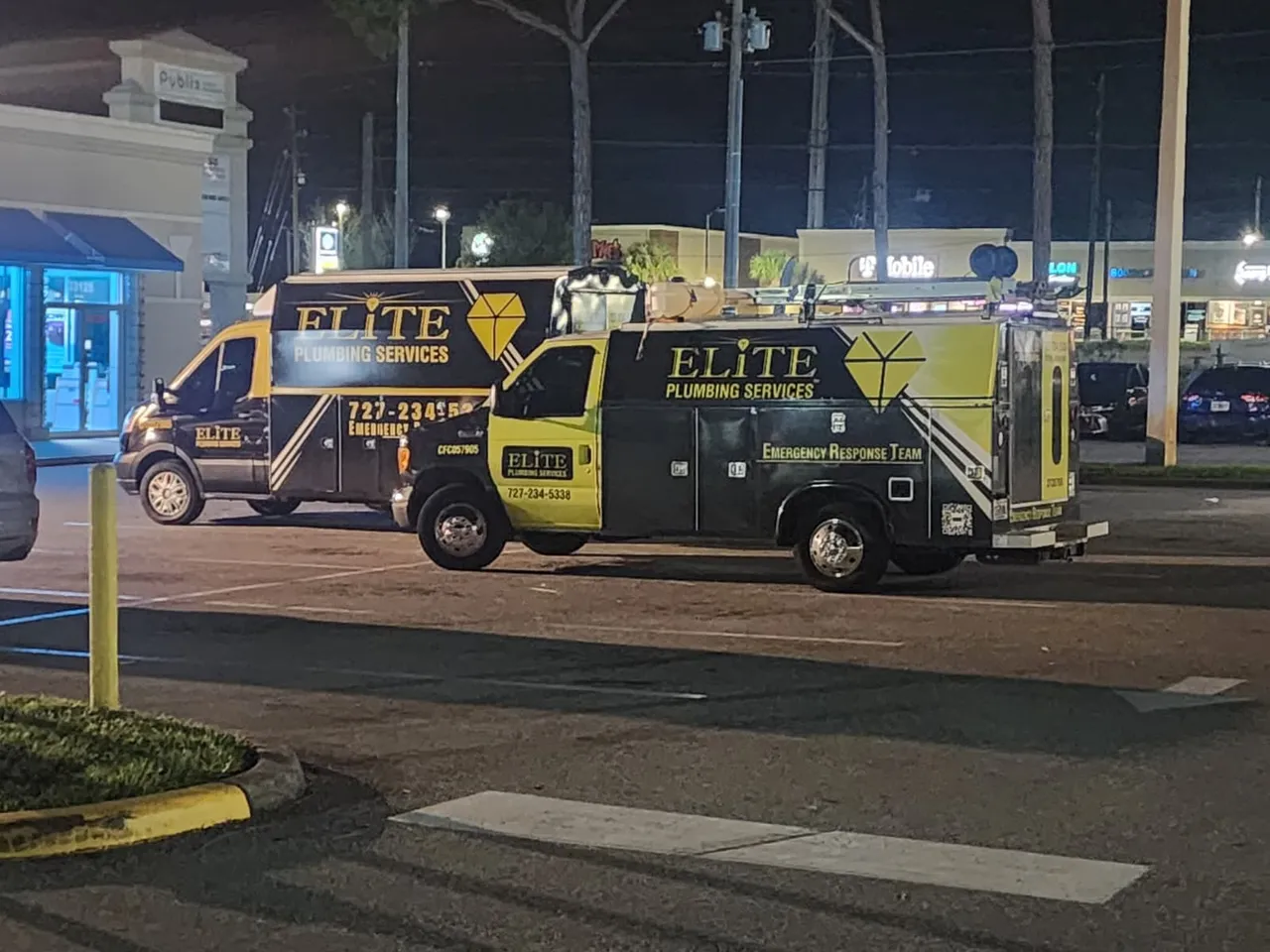
When you search for a top rated residential plumber in Pinellas County, you’re looking for more than a polished listing—you want someone who can explain what’s wrong, what the work will involve, and what it will cost before the job moves forward. A reliable residential plumbing visit should include a clear conversation, a diagnosis you can understand, written options when appropriate, and a final check that the repair or installation is working as intended.
That process matters whether you’re dealing with a dripping fixture, a water heater that stopped working, a drain that keeps clogging, or a leak that can’t wait. Here’s what Pinellas County homeowners can expect from a professional plumbing service call—and what to ask so you can make a confident decision.
Key takeaways
- A good first call clarifies urgency. Explain the symptom, where it is happening, and whether water is actively damaging the home.
- A recommendation should connect the diagnosis to the work. Ask what the plumber found, what remains uncertain, and why the proposed fix addresses the cause.
- Compare estimates by scope, not only by total. Materials, exclusions, permits, cleanup, and warranty terms can make two prices very different.
- Verify the contractor and keep the paperwork. Pinellas County advises homeowners to check licensing, get written estimates, and review the contract details.
What to expect from a top rated residential plumber in Pinellas County
The service experience starts before anyone arrives. On the first call, be ready to describe the problem, when it began, which fixtures or rooms are affected, and whether the issue is getting worse. If you have a planned installation, share the model or type of equipment involved and any access constraints. These details help the company understand whether the visit is urgent and what the technician may need to assess.
For an active leak or a problem causing immediate damage, tell the dispatcher plainly. If you can safely reach the home’s main shutoff, stopping the water may limit damage while you wait. Don’t attempt electrical work or enter standing water near electrical equipment. For a non-urgent repair, installation, or recurring clog, ask what the visit includes and when you’ll receive an assessment and estimate.
A local provider’s availability should be easy to understand. Elite Plumbing Services says it offers emergency plumbing 24/7, including nights, weekends, and holidays, and serves residential customers across Pinellas County. That is a company-published service commitment—not a guarantee of a specific arrival time—so homeowners should confirm current availability and next steps when they call. For urgent situations, see the company’s 24/7 emergency plumbing information.
The people behind the service: Mike and Angelo
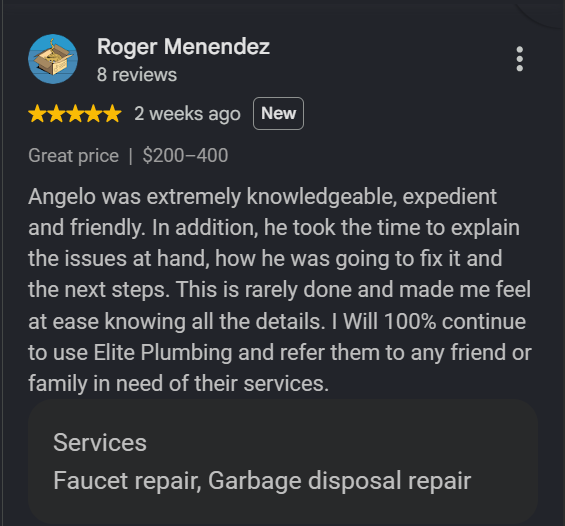
Elite Plumbing Services was founded in 2000 by owner Mike Humes. And sometimes the clearest picture of a service call comes from the people who experienced it. In the two review screenshots shared for this article, Roger Menendez praises Angelo’s knowledge and friendly manner, while Gene Dorr highlights how clearly Angelo explained the work and answered his questions.
“Angelo was extremely knowledgeable, expedient and friendly.” — Roger Menendez
“Angelo was professional, knowledgeable, and took the time to explain everything clearly.” — Gene Dorr
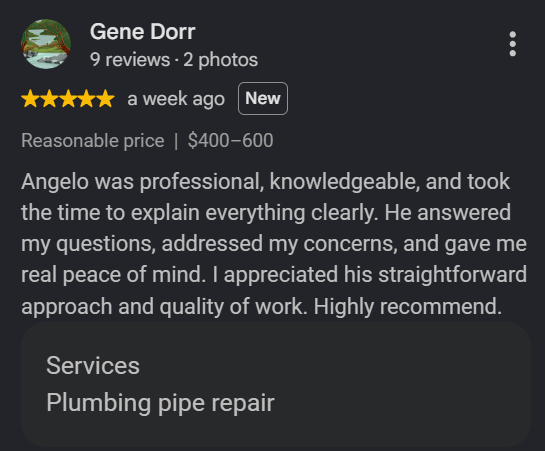
These are individual customer experiences, not a promise that every job will be the same. Any price displayed in a screenshot applies only to that specific service visit.
How a residential plumber in Pinellas County should diagnose the problem
Before approving work, you should be able to explain the problem back in your own words. A professional should listen to the symptoms, inspect the affected area, ask about relevant history, and tell you what the findings do—and do not—show. The inspection will vary: a leaking supply line, a slow drain, and a water heater problem call for different checks.
Ask questions like:
- What did you find that points to this cause?
- Is this the only reasonable repair, or are there options?
- What could happen if I wait, and what is safe to monitor?
- Is any part of the diagnosis still uncertain?
The goal is to understand whether a recommendation addresses the source of the problem or only the visible symptom. For example, if a drain repeatedly backs up, ask what the plumber believes is causing it and what evidence supports the proposed next step. A recurring issue may need more investigation than another quick clearing—but the plumber should explain why before recommending additional work.
Pinellas County’s contractor-selection guidance encourages homeowners to verify a contractor’s license and experience, rather than relying on a verbal assurance. That check is one part of a sound decision; clear diagnosis and communication matter too. Elite lists residential plumbing repairs and maintenance among its services, and homeowners can use the same questions to understand any provider’s proposed work.
How to compare plumbing estimates without choosing on price alone
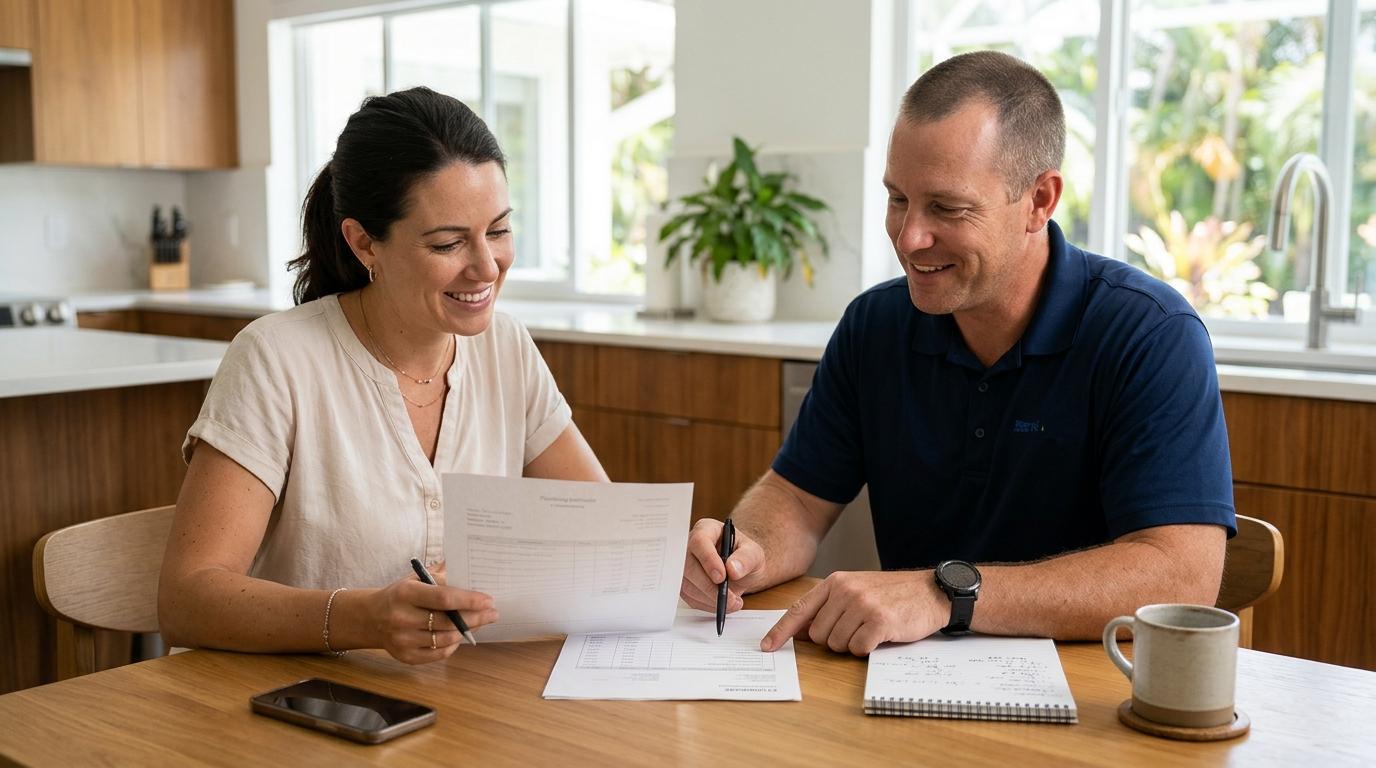
For planned work, ask for the recommendation in writing and compare the same details across estimates. Pinellas County advises homeowners to obtain written estimates from several licensed contractors for permitted projects. Its guidance says estimates should identify the work, materials, completion timing, and total cost.
Use this checklist to compare quotes:
| What to compare | What to look for |
|---|---|
| Scope | The specific repair or installation, including what is not included |
| Materials or equipment | Product, model, size, and any stated alternatives |
| Price | Total cost and whether diagnostic, labor, parts, disposal, or other charges are included |
| Permits and inspections | Who determines what applies, obtains any required permit, and coordinates inspection |
| Timing and access | Expected start, duration, access needs, and cleanup |
| Warranty | What is covered, for how long, and how to request follow-up |
A lower total is not automatically a better value if the scope omits materials, cleanup, or follow-up. A higher estimate may include work another contractor left out. If two quotes differ substantially, ask each provider to explain the difference in writing before choosing. Don’t assume that a permit is unnecessary just because one quote is cheaper; ask who is responsible for checking the requirements for your specific project and address.
For bigger decisions, such as a water heater replacement, compare equipment, installation details, and warranty—not just the unit price. Elite’s water heater service page describes its installation, repair, and maintenance services; use it as a starting point for the questions you’ll want answered in any estimate.
How to verify a plumber’s credentials and local accountability
Ask for the contractor’s business name and license information, then verify the record through the appropriate public agency. Pinellas County explains that construction contractors may be licensed through the state or county, and it links homeowners to the relevant Florida license lookup and county contractor search. The right route depends on the contractor classification and proposed work, so verify the specific business and license type rather than relying on a logo, online profile, or advertisement.
The county also flags warning signs: a contractor who cannot provide a license number, suggests avoiding a required permit, or asks for cash or a large payment up front. Treat these as reasons to pause and clarify. Licensing, registration, and permitting requirements can differ by scope and jurisdiction; ask who will confirm what applies to your job.
Reviews can help you evaluate communication and follow-through, but use them alongside credentials, a written scope, and direct answers to your questions. Elite Plumbing Services’ homepage reports more than 20 years of experience and more than 200 five-star Google reviews. Those are claims published by the company and may change over time; check the current review profile and read recent comments for patterns that matter to your household.
What happens on service day—and after the repair
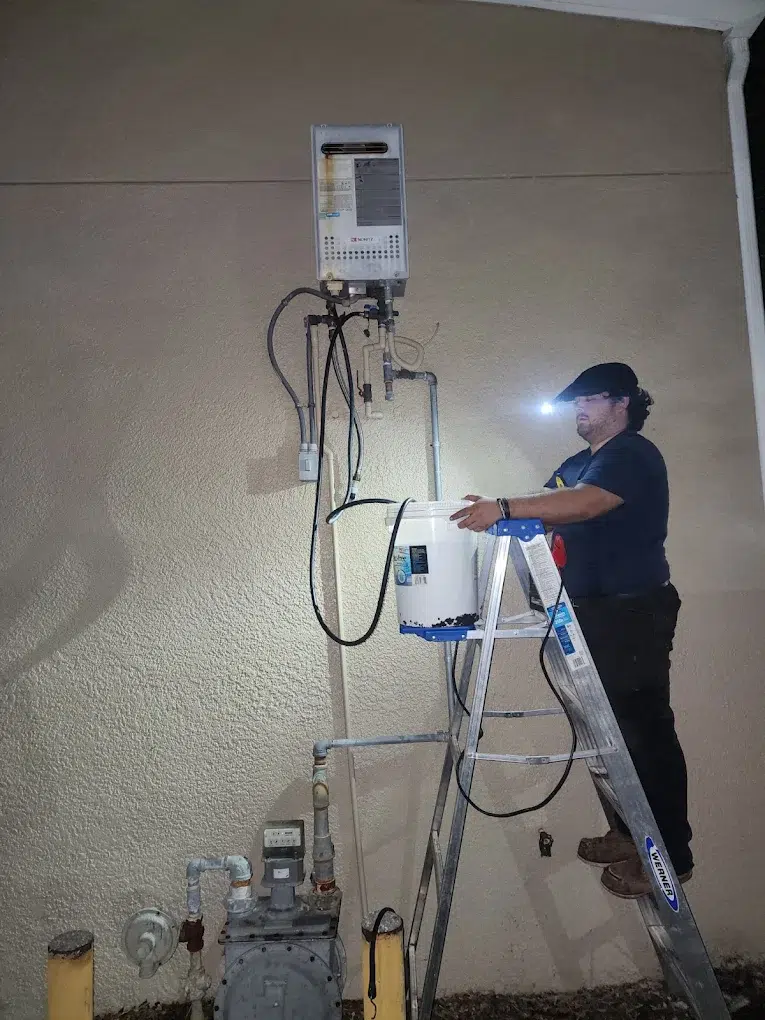
Before work begins, the technician should review the diagnosis and the approved scope with you. If something changes after the work starts, ask for an explanation and updated price before approving the additional work. You should know what area needs access, whether water will be shut off, how the work area will be protected, and what cleanup is included.
At completion, ask what was repaired or installed and how it was tested. Depending on the job, that may mean running water, checking for leaks, confirming drainage, or demonstrating the equipment’s operation. Request the invoice, equipment details when relevant, permit or inspection information if applicable, and written warranty terms. Keep them somewhere you can find them if the problem returns or you sell the home.
Pinellas County’s contract checklist recommends documenting contractor identity and license number, a precise description of work and materials, start and completion dates, cleanup, and warranty terms. Those details give both sides a clear record. Elite describes its approach as transparent pricing and “solutions that last”; regardless of which company you choose, look for explanations and written terms that make those promises concrete.
Homeowner checklist: questions to ask before approving work
Before saying yes, make sure you can answer these questions:
- What is the diagnosis, and what evidence supports it?
- What exactly is included—and excluded—in the quoted work?
- What materials, parts, or equipment will be used?
- Who checks whether a permit or inspection is required?
- How will additional work or a price change be approved?
- What does the warranty cover, and how do I request follow-up?
- What test, cleanup, and documentation will I receive when the job is done?
If the answers are vague, ask for clarification in writing. Pinellas County’s contractor guide recommends checking the estimate and contract details before work begins; a few minutes spent clarifying scope can prevent confusion later.
Frequently asked questions
How do I verify a residential plumber in Pinellas County?
Ask for the business and license details, then check them through the applicable state or county licensing agency. Pinellas County’s contractor guidance links to both routes and recommends verifying license and experience. Confirm that the record matches the contractor and the type of work being proposed.
Should I get more than one plumbing estimate?
For planned, non-emergency work, comparing written estimates can help you understand scope and price. Pinellas County recommends written estimates from several licensed contractors for permitted projects. Compare the work, materials, timing, and total—not just the final number.
What should a plumbing estimate include?
It should clearly describe the work, materials or equipment, total cost, and expected timing. Also ask about exclusions, permit responsibility, cleanup, and warranty. Pinellas County’s guidance says contractor estimates should include the work, materials, completion date, and total cost.
When should I call an emergency plumber?
Call promptly when water is actively damaging the home, a pipe has burst, sewage is backing up, or you cannot safely use an essential plumbing fixture. If safe, shut off the relevant water supply while arranging help. For less urgent problems, schedule an assessment and compare written options.
What should I keep after plumbing work?
Keep the estimate, approved scope, invoice, warranty, equipment details, and permit or inspection records when applicable. These documents help you understand what was done and make future service or warranty questions easier to resolve.
Make the next call easier
Before contacting a plumber, write down what is happening, when it started, which fixtures or rooms are affected, and whether the condition is changing. Take a photo or short video if it helps show an intermittent leak or backup. For a planned project, list the questions you want answered about scope, timing, permits, and warranty; Pinellas County’s contractor guidance recommends reviewing the written estimate and contract before work begins.
That small bit of preparation gives the plumber a clearer starting point and gives you a better basis for comparing recommendations. If water is actively damaging your home, focus first on safety and stopping the water if you can do so safely; you can evaluate the detailed paperwork once the immediate situation is under control.