
Water Heater Repair Guide for Palm Harbor & Pinellas County
7 Signs Your Water Heater Needs Repair Before It Completely Fails
Your water heater often gives warning signs before it stops working completely. Inconsistent temperatures, unusual sounds, discolored water, leaks, weak hot-water pressure, rising utility costs, and frequent resets can all indicate that a component is wearing out or the tank is deteriorating.
How can you tell your water heater needs repair?
Look for changes in performance rather than waiting for total failure. If the water is no longer consistently hot, the tank makes new noises, moisture appears around the unit, or your energy use increases without explanation, schedule an inspection. Early water heater repair in Palm Harbor may prevent a sudden loss of hot water and reduce the risk of water damage.
A water heater works every day, often without much attention, until something changes. The shower turns cold sooner than usual. The tank begins to pop or rumble. Water around the base appears and then disappears. These symptoms may seem minor, but they can point to sediment buildup, failing heating elements, damaged valves, corrosion, venting trouble, or a weakening tank.
Not every water heater symptom means the unit must be replaced. Many problems can be corrected when they are caught early. The key is knowing which signs require routine service and which ones call for immediate action.
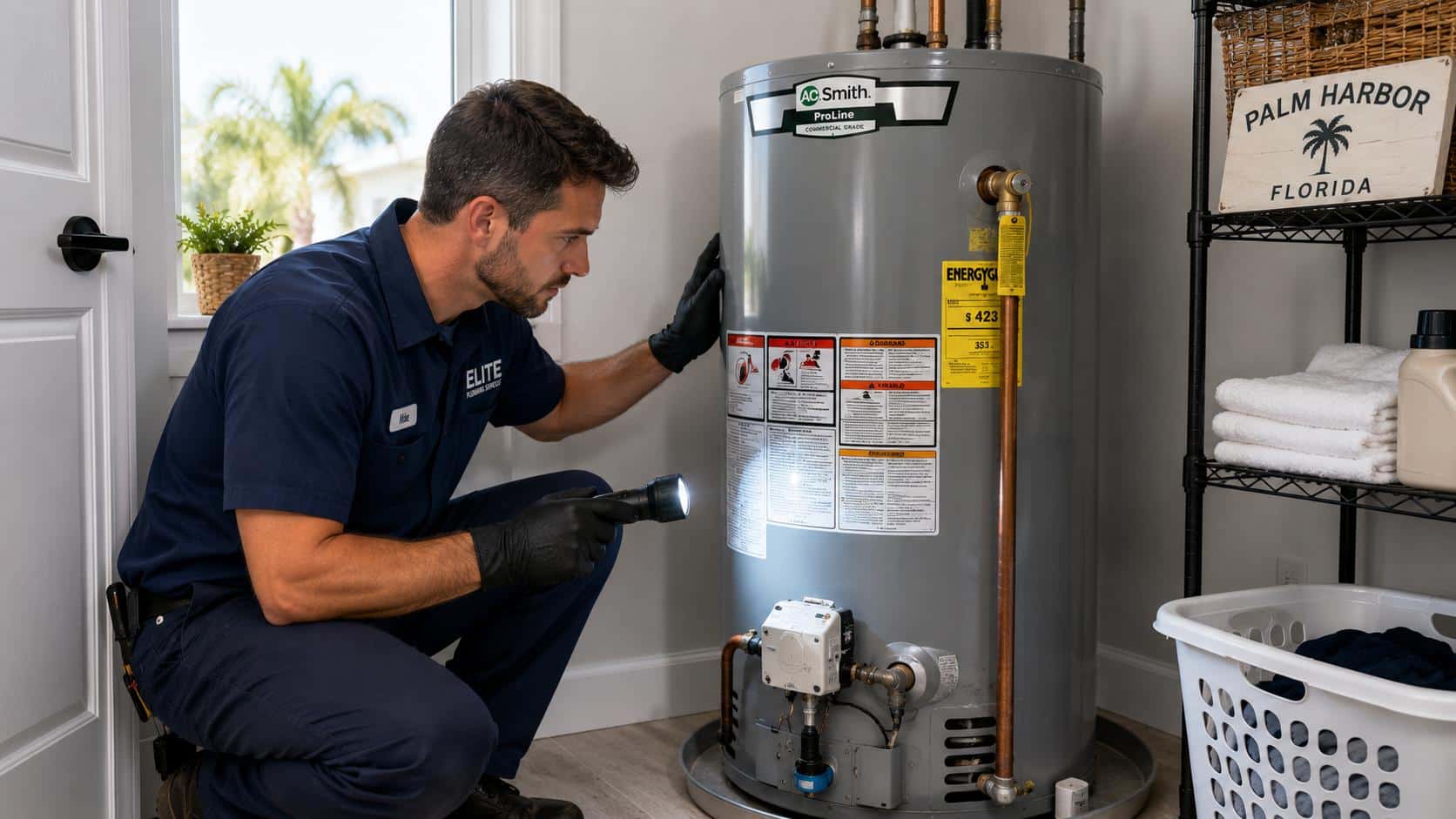
Why early water heater repair matters
Ignoring early warning signs can turn a manageable repair into a complete breakdown. A failing thermostat or heating element may leave you without hot water. A leaking valve can damage nearby flooring or drywall. A corroded tank can eventually release a large amount of water and require immediate replacement.
Early diagnosis also gives you time to compare options. You can decide whether repair is cost-effective, plan for replacement, or consider a different system instead of making a rushed decision after the unit fails.
1. Your hot water is inconsistent or runs out too quickly
One of the clearest signs of water heater trouble is a change in temperature. The water may be lukewarm, fluctuate between hot and cold, or run out much faster than it did before.
Possible causes in a storage water heater
- A failing electric heating element
- A malfunctioning thermostat
- Sediment buildup reducing usable tank capacity
- A damaged dip tube mixing incoming cold water with hot water
- A burner, pilot, ignition, or gas-control problem
- A tank that is undersized for current household demand
For a tankless unit, fluctuating temperature may be related to scale, flow sensors, gas supply, ignition, venting, filters, or an error condition. Professional tankless water heater repair should begin with the error code and manufacturer-specific diagnostics rather than guesswork.
2. The tank makes popping, rumbling, banging, or sizzling sounds
A quiet hum can be normal, but new or increasing noises deserve attention. Popping and rumbling in a storage tank are commonly associated with mineral deposits or sediment collecting at the bottom. Water can become trapped beneath the buildup and make noise as it heats and moves through the layer.
Sediment can reduce heat transfer, make the burner or elements work harder, and contribute to overheating at the bottom of the tank. Sizzling may indicate water contacting a hot surface, while banging may also come from expanding pipes or pressure changes elsewhere in the plumbing system.
Do not assume every noisy tank only needs flushing. If the drain valve is damaged, the tank is heavily corroded, or maintenance has been neglected for many years, aggressive flushing can expose an existing weakness. A plumber should evaluate the age and condition of the unit first.
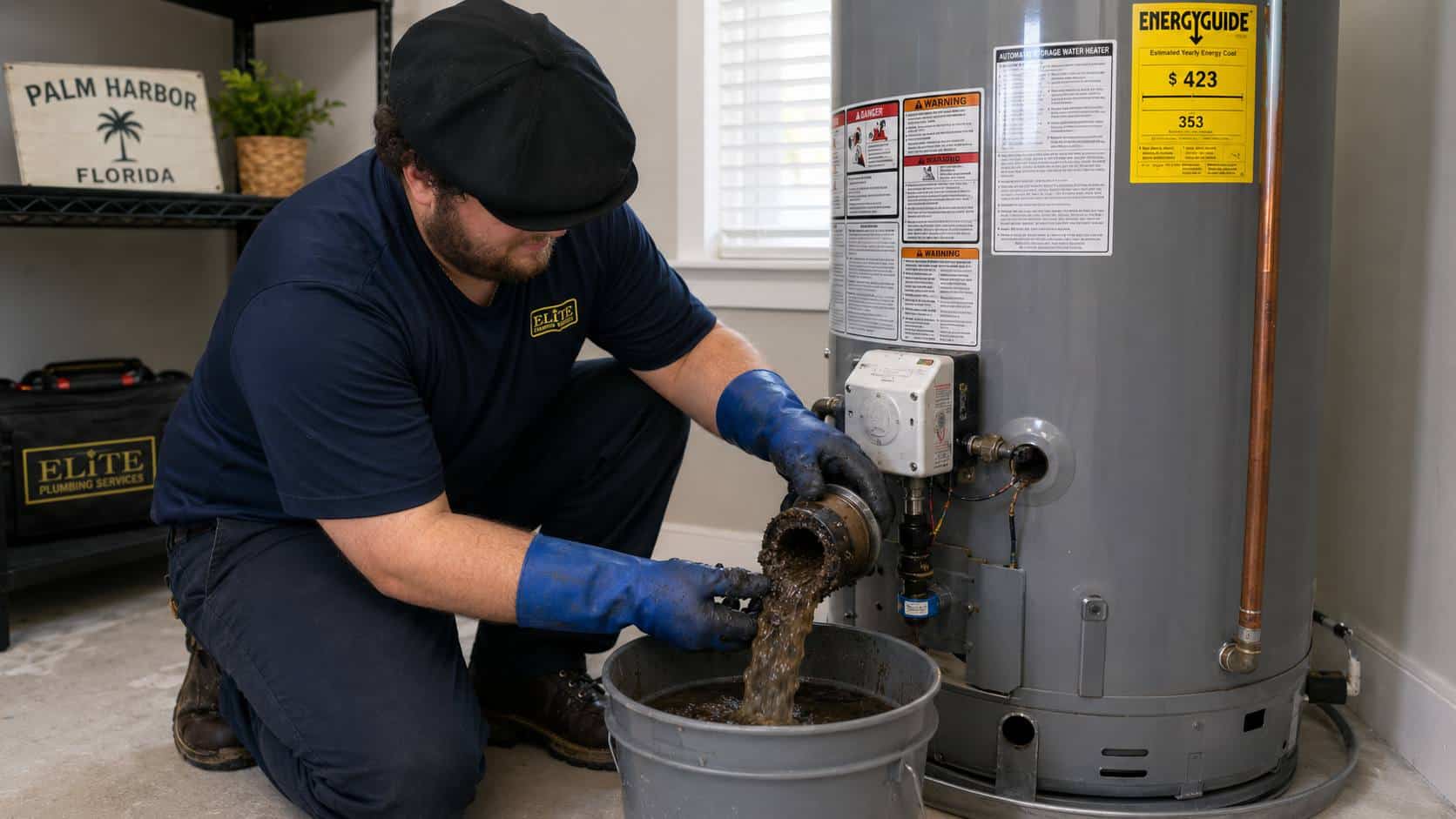
3. Hot water looks rusty, brown, cloudy, or metallic
Discolored hot water can indicate corrosion, sediment, or a reaction involving the tank, piping, or anode rod. Compare the hot and cold water at several fixtures. If only the hot side is discolored, the water heater or hot-water piping is a likely source. If both sides are affected, the cause may be the municipal supply, well system, or whole-home plumbing.
What different changes may suggest
- Rusty or brown water: possible corrosion in the tank or piping
- Cloudy water: suspended minerals, air, or sediment
- Metallic taste or odor: possible corrosion or water-quality interaction
- Rotten-egg odor: possible bacterial activity or anode-related reaction
Do not drink or cook with water that appears contaminated until the cause is understood. A plumber can inspect the tank and determine whether maintenance, component replacement, water treatment, or full water heater installation is appropriate.
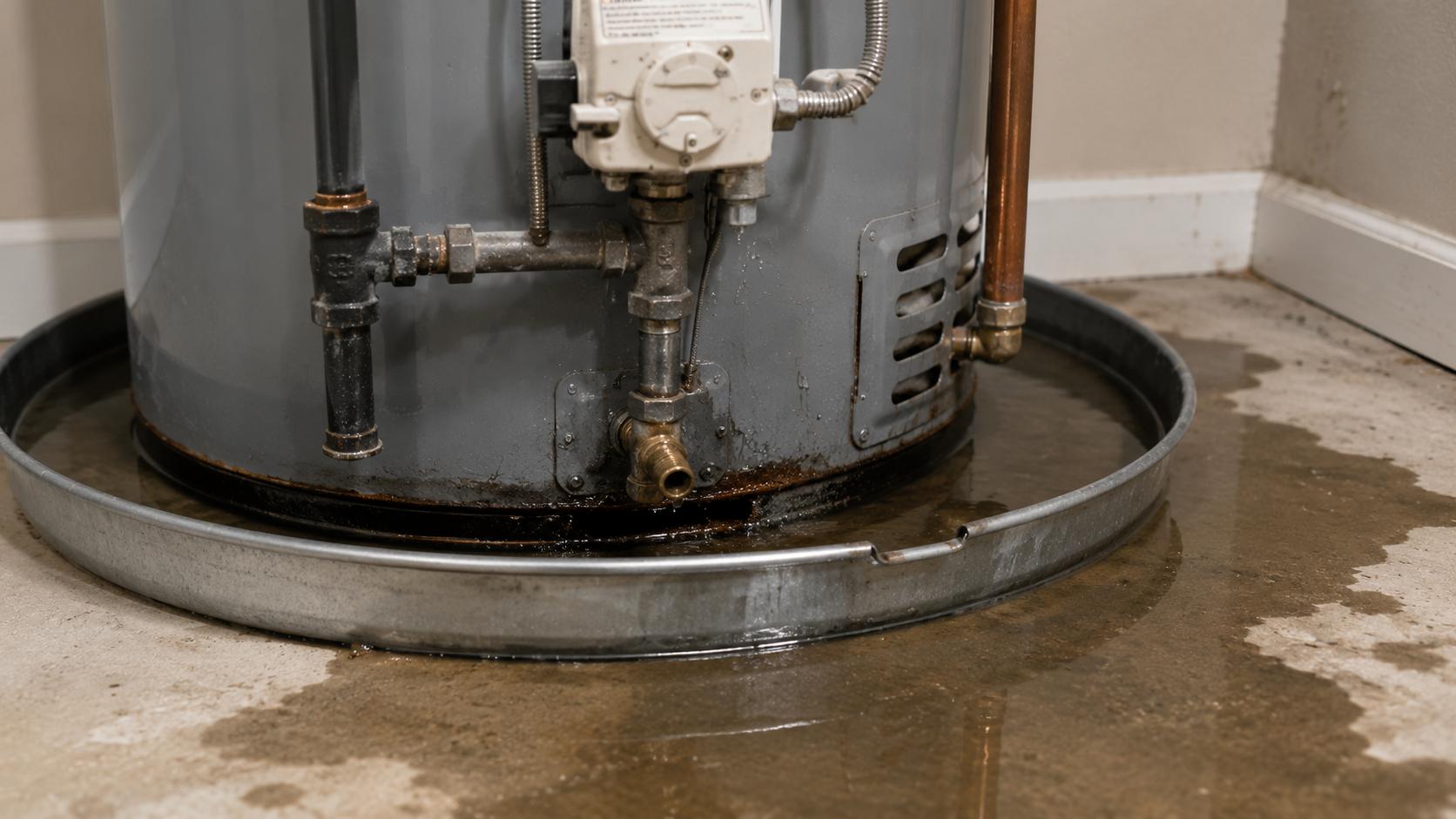
4. You see moisture, drips, or pooling water around the unit
Any water around a water heater should be investigated. The source may be a loose connection, temperature-and-pressure relief valve, drain valve, condensate line, expansion problem, or the tank itself. Some repairs are relatively straightforward, but a leaking storage tank generally cannot be patched reliably and usually requires replacement.
Check these areas without touching hot components
- Hot- and cold-water connections at the top
- The temperature-and-pressure relief valve and discharge pipe
- The drain valve near the bottom
- Condensate tubing on condensing or heat-pump models
- The pan beneath the heater
- The tank seam and lower body
Condensation can sometimes look like a leak, especially on high-efficiency equipment, but it should still drain correctly. Repeated water in the pan or around the base is not normal.
5. Hot-water pressure is weaker than cold-water pressure
If pressure is normal on the cold side but weak on the hot side, the restriction may be in the water heater, hot-water piping, shutoff valve, heat-trap fittings, or fixture connections. Mineral scale and corrosion can narrow passages and reduce flow.
Check more than one fixture. Low flow at a single faucet may be caused by a clogged aerator or cartridge. Low hot-water flow throughout the home points to a central issue. Tankless systems may also reduce or interrupt output when filters are clogged, flow is below the activation threshold, or scale has accumulated in the heat exchanger.
6. Your gas or electric bill rises without a clear reason
Water heating is a significant part of household energy use. A unit that runs longer than normal, loses heat, cycles repeatedly, or struggles through sediment may consume more energy while delivering less hot water.
Before blaming the water heater, consider weather, utility-rate changes, additional occupants, longer showers, appliance changes, and pool or spa use. Then inspect whether the heater is running continuously, reheating too often, or producing less hot water than before.
ENERGY STAR notes that water heating is a meaningful share of home energy use and that efficient replacement equipment can reduce operating costs. When repair costs are increasing and the system is aging, ask a plumber to compare repair with a properly sized replacement rather than focusing only on the immediate part.
7. The water heater frequently shuts off, trips, or needs resetting
A unit that repeatedly stops working is not functioning normally. Electric models may trip a breaker or high-limit switch because of wiring, thermostat, element, or overheating problems. Gas models may have ignition, flame-sensing, gas-control, venting, or combustion issues. Tankless heaters may display recurring error codes when a sensor, fan, vent, flow path, fuel supply, or scale condition needs attention.
Do not repeatedly reset a tripping breaker or bypass a safety control. Safety devices shut the unit down for a reason. Repeated resets can hide a serious electrical, gas, venting, or overheating problem.
Do not wait for a complete water heater failure
Elite Plumbing Services Inc. provides professional water heater repair for homeowners and businesses in Palm Harbor and surrounding Pinellas County communities. A prompt diagnosis can help restore reliable hot water and clarify whether repair or replacement is the better investment.
Schedule Water Heater Repair Request Emergency Plumbing HelpShould you repair or replace your water heater?
The answer depends on the cause of the problem, condition of the tank, availability of parts, repair history, efficiency, installation quality, and cost of the proposed work. Age matters, but it should not be the only factor.
| Repair may make sense when | Replacement may make more sense when |
|---|---|
| The problem is a replaceable thermostat, element, valve, sensor, or ignition component | The storage tank itself is leaking or structurally corroded |
| The heater has been reliable and is otherwise in good condition | The unit has needed repeated repairs in a short period |
| The repair cost is reasonable compared with replacement | Replacement parts are obsolete, unavailable, or unusually expensive |
| The unit meets current household hot-water needs | The household regularly runs out of hot water because capacity is inadequate |
| The installation and venting are safe and code-compliant | Installation, venting, drainage, or electrical conditions require major correction |
| The system remains reasonably efficient | Energy use is high and a more efficient option fits the home and budget |
If replacement is recommended, Elite Plumbing can evaluate conventional tanks, tankless equipment, and other suitable options through its Palm Harbor water heater installation service. Proper sizing is essential; choosing equipment based only on the old tank size or the lowest price can lead to poor performance.
What a professional water heater inspection may include
- Confirming the model, fuel type, age, and warranty status
- Checking temperature settings and hot-water performance
- Inspecting the tank, valves, fittings, pan, and discharge piping
- Testing thermostats, heating elements, ignition, burners, or sensors
- Reviewing venting and combustion conditions on gas-fired units
- Checking electrical connections and safety controls
- Looking for scale, sediment, corrosion, and pressure-related problems
- Reviewing error codes and maintenance history on tankless units
- Comparing repair cost, remaining condition, and replacement options
When water heater trouble becomes an emergency
Some problems can wait for a scheduled appointment, but others require immediate action. Call promptly when you see active tank leakage, rapidly spreading water, a bulging tank, severe corrosion, repeated breaker trips, smoke, burning odors, uncontrolled gas odor, soot, or a carbon-monoxide alarm.
Safe first steps
- Keep people and pets away from standing water and the appliance.
- Do not touch wet electrical equipment.
- For a suspected gas or carbon-monoxide emergency, leave the building and call from outside.
- Use the water shutoff only if it is accessible and safe.
- Do not operate a damaged temperature-and-pressure relief valve.
- Contact qualified emergency professionals.
How Palm Harbor homeowners can reduce future water heater problems
Florida water conditions, humidity, year-round hot-water use, outdoor installations, and utility-space heat can all affect equipment. Maintenance should follow the manufacturer’s instructions and the condition of the specific unit.
- Inspect the area around the heater regularly for moisture and corrosion.
- Keep the installation area clear and accessible.
- Test carbon-monoxide alarms monthly in homes with fuel-burning equipment.
- Have gas venting, burners, and safety controls checked when performance changes.
- Follow manufacturer guidance for tank flushing, anode inspection, filters, and tankless descaling.
- Do not ignore recurring error codes or breaker trips.
- Know where the water, gas, and electrical shutoffs are located.
- Consider a drain pan and leak sensor where appropriate.
Frequently asked questions about water heater repair
What are the most common signs a water heater needs repair?
Common signs include inconsistent hot water, unusual noises, rusty or discolored water, leaking around the tank, reduced hot-water pressure, rising energy bills, and a unit that frequently shuts off or needs resetting.
Why does my hot water run out faster than it used to?
Possible causes include sediment buildup, a failed heating element, a thermostat problem, a damaged dip tube, increased household demand, or a tank that is no longer large enough for the home’s needs.
Why is my water heater making popping or rumbling noises?
Popping or rumbling is often associated with sediment or mineral buildup in a storage tank. Water can become trapped beneath the buildup and make noise as it heats. A plumber should inspect the tank before deciding whether flushing is appropriate.
Is a leaking water heater an emergency?
A small drip from a fitting still needs prompt attention. Active tank leakage, rapidly spreading water, wet electrical components, a bulging tank, or signs of imminent failure should be treated as urgent.
Can a tankless water heater be repaired?
Yes. Many tankless problems can be repaired, including ignition, sensor, scale, flow, venting, fan, or control issues. Diagnosis should follow the model’s error codes and manufacturer procedures.
Should I repair or replace my water heater?
Repair may be worthwhile when the problem is limited to a replaceable component and the tank is sound. Replacement is usually more appropriate when the tank leaks, corrosion is severe, failures are frequent, or the system no longer meets the home’s needs efficiently.
Can I keep resetting a water heater that shuts off?
No. A recurring trip or shutdown indicates an unresolved problem. Repeatedly resetting the unit can bypass an important warning and should be replaced by professional diagnosis.
Schedule dependable water heater repair in Palm Harbor
If your water heater is noisy, leaking, inconsistent, or repeatedly shutting down, Elite Plumbing Services Inc. can diagnose the problem and explain your options clearly. The company serves Palm Harbor and surrounding Pinellas County communities with repair, replacement, and emergency plumbing service.
Schedule Water Heater Repair Service Explore Water Heater InstallationFinal takeaway
Your water heater rarely fails without warning. Temperature changes, new noises, discolored water, moisture, low pressure, higher energy use, and frequent shutdowns are all reasons to schedule an inspection. Catching a repairable problem early can help restore reliable hot water and give you time to plan if replacement is the better choice.
For professional water heater repair in Palm Harbor, contact Elite Plumbing Services Inc. before a small symptom becomes a complete breakdown.